
-
Consulting ▼
Consulting Services
-
Solutions ▼
Marketing AI
Support AI
Analytics AI
- Technology
- About
Analyzes your email history, identifies what worked best, creates a content plan for next month. Each recommendation backed by data, not guesswork.
Book AI AuditPretty much every company with an email list has the same monthly ritual.
Marketing team sits down: "What should we send this month?" Someone suggests a promotion. Someone else suggests a story. Third person says "what about that thing we did last year?"
Maybe you look at last month's numbers. Maybe you reference a content calendar from six months ago. Mostly it's brainstorming based on what feels right.
And look — experienced email marketers develop good instincts. But they're working from memory, not data. "I think product launch emails do well" — but do they? For which segments? At what frequency?
Result:
Content planning takes hours. Lots of debate. Decisions based on recent memory bias, not comprehensive performance data.
You might repeat stuff that flopped. You might skip patterns that crushed it. No systematic way to learn from your entire email history.
Here's the thing — this agent works in tandem with the Email Analytics Agent.
Agent doesn't just look at last month. It analyzes your entire email history — ideally 12+ months.
For every campaign you've sent:
Builds a complete picture of what works for your audience.
System identifies timing patterns:
"Product launch emails in Q4 drive 2.3x more revenue than Q2."
"Story-driven content performs best in January."
"Discount offers see fatigue if sent more than 2x per month."
Not just "this worked once" — patterns across time.
If you segment your list, agent analyzes what works for each segment:
"New subscribers respond better to educational content."
"Repeat customers engage with new product launches."
"Dormant subscribers need win-back offers with specific hooks."
Different audiences need different content. System shows you the patterns.
Agent creates a structured content plan for the next month:
Each recommendation backed by historical data. Not "let's try this" — "this pattern has worked X times before."
After you approve the plan, agent can generate detailed creative briefs for each email:
Basically gives your copywriter or designer everything they need to execute. (Works great in combination with our AI Copywriter for even faster production.)
Agent has access to your internal knowledge base:
So the brief isn't generic — it's pulling from real material that resonates with your audience.
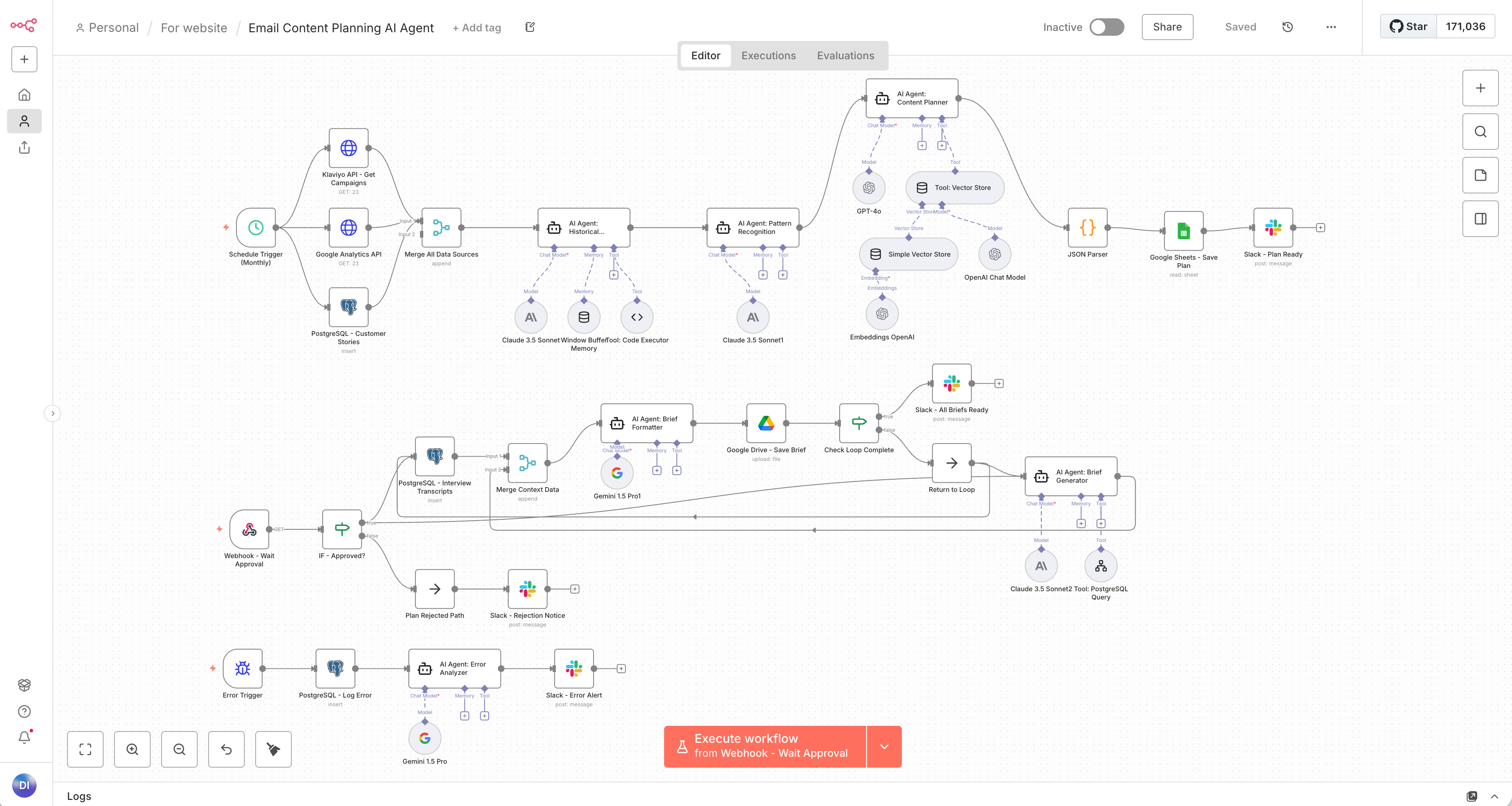
Email planning meeting: 2-3 hours of brainstorming and debate. Content decisions based on recent campaigns and team hunches. No systematic optimization.
D2C brand sending 12-15 emails per month. Planning process was chaotic — team would argue about what to send, often defaulting to "let's do another discount."
Agent analyzed 18 months of history. Found patterns:
Story-driven emails about product sourcing drove 1.8x higher engagement than straight promotions. But only when sent no more than once per week. Customer spotlight emails had the highest revenue-per-send, but team had only sent 3 in the last year because "they take time to produce."
New plan: Structured mix of content types based on what actually worked. More customer stories (high ROI), fewer generic discounts (audience fatigue). Story-driven content once per week.
Next quarter: 40% increase in email revenue, 25% higher average order value from email traffic.
Team still has final approval on everything. But now they're working from data, not guessing.
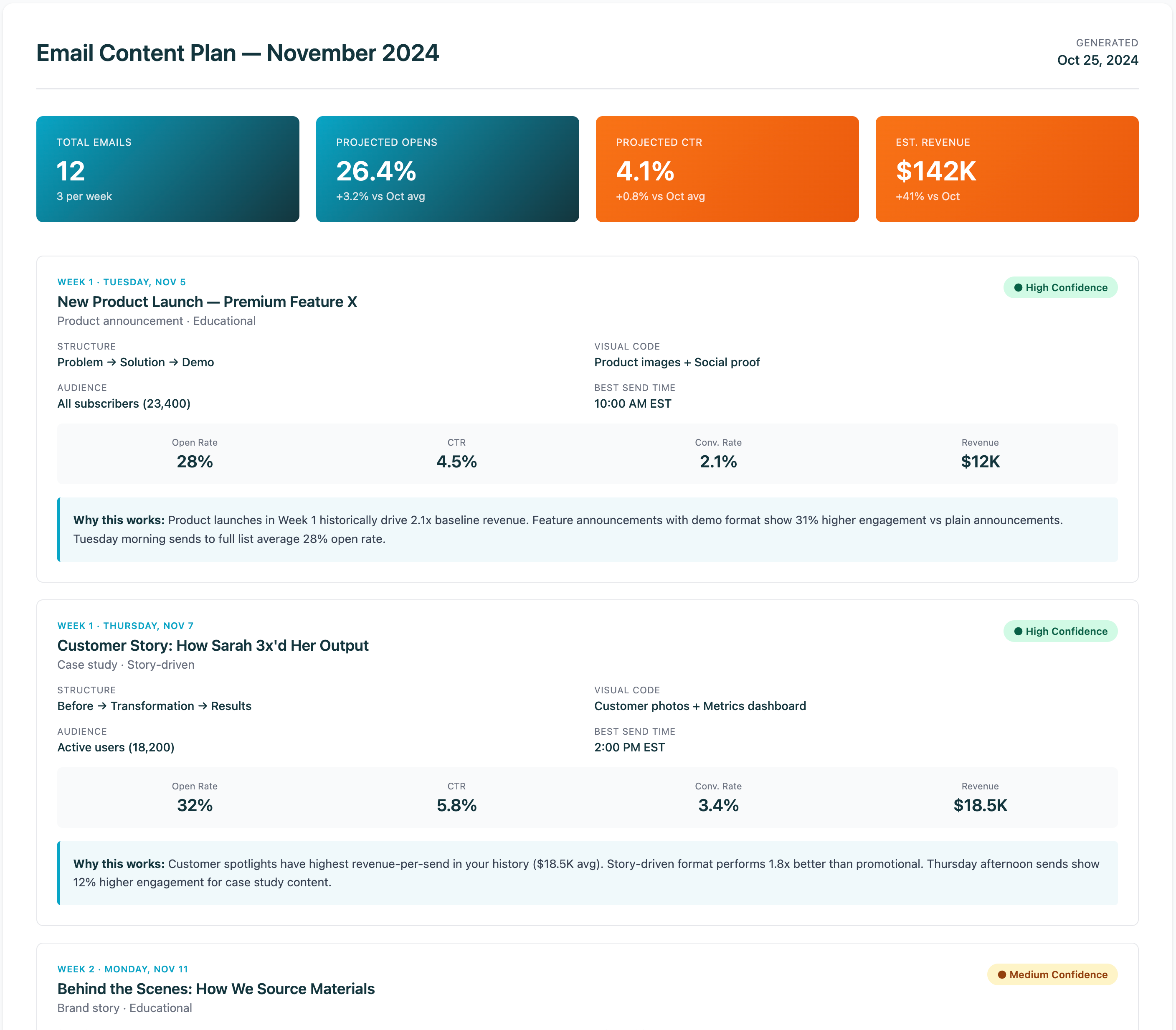
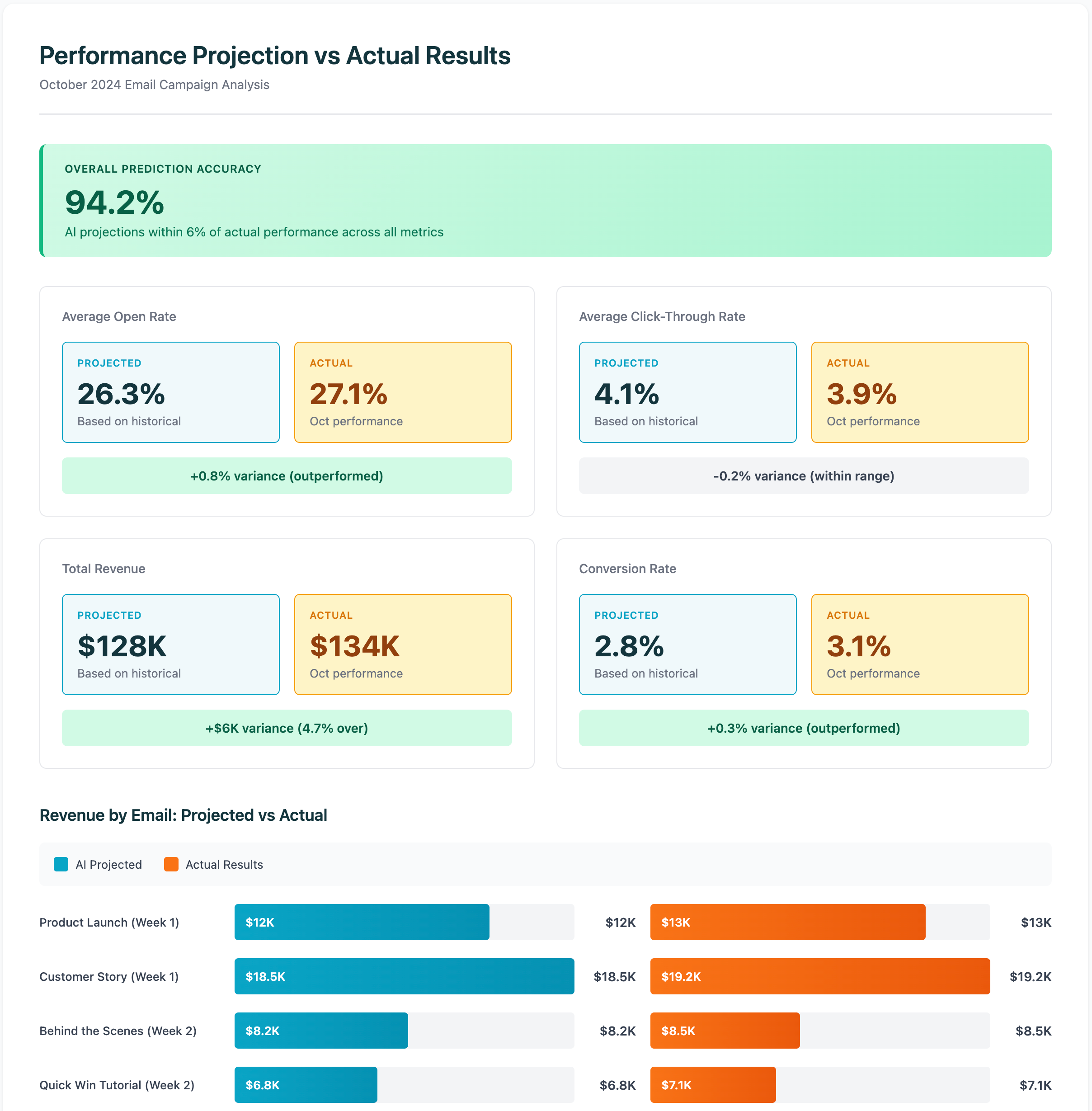
For the agent to work, we need:
As long as you have email history and some internal content database — we can build this.
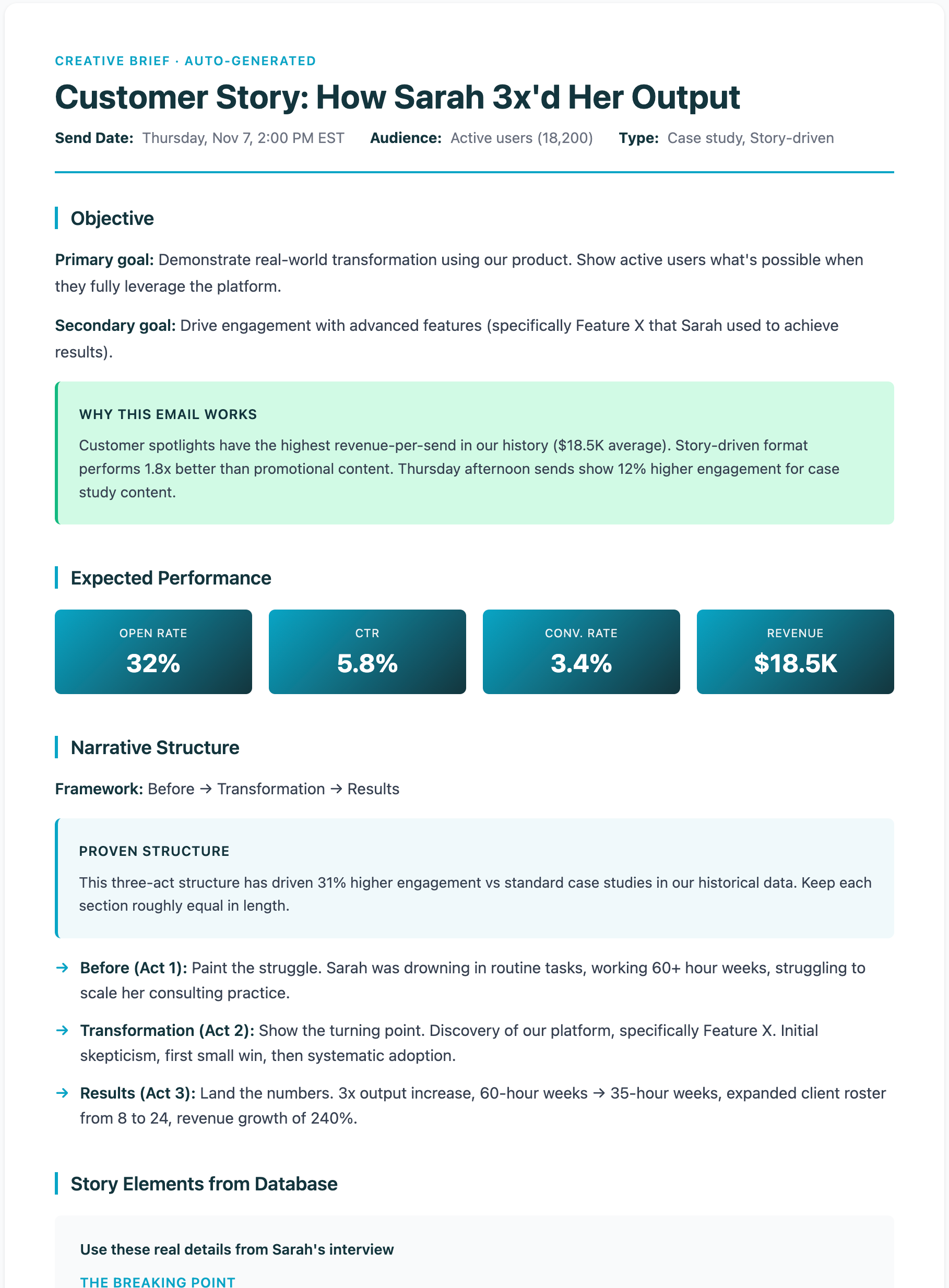
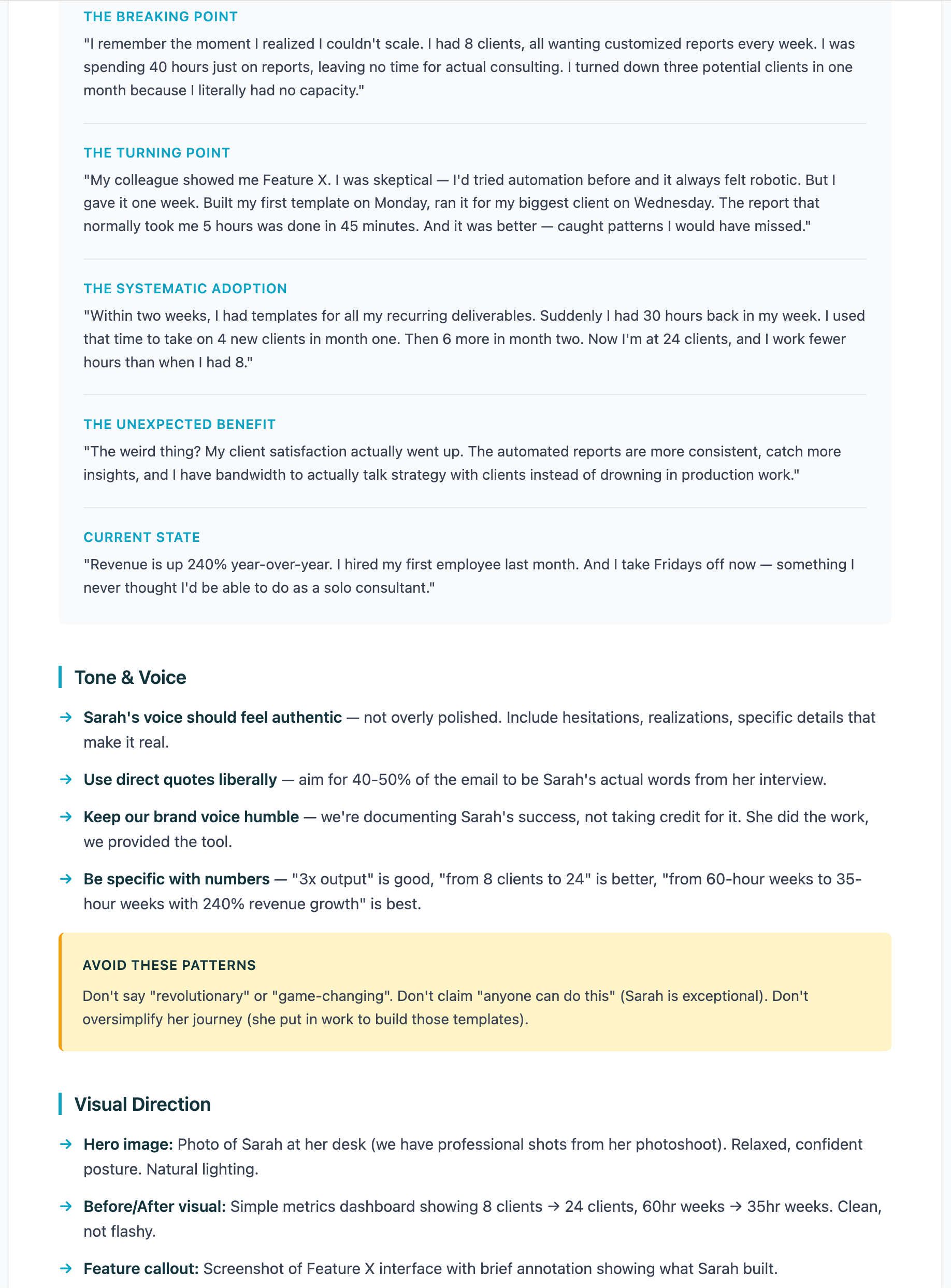
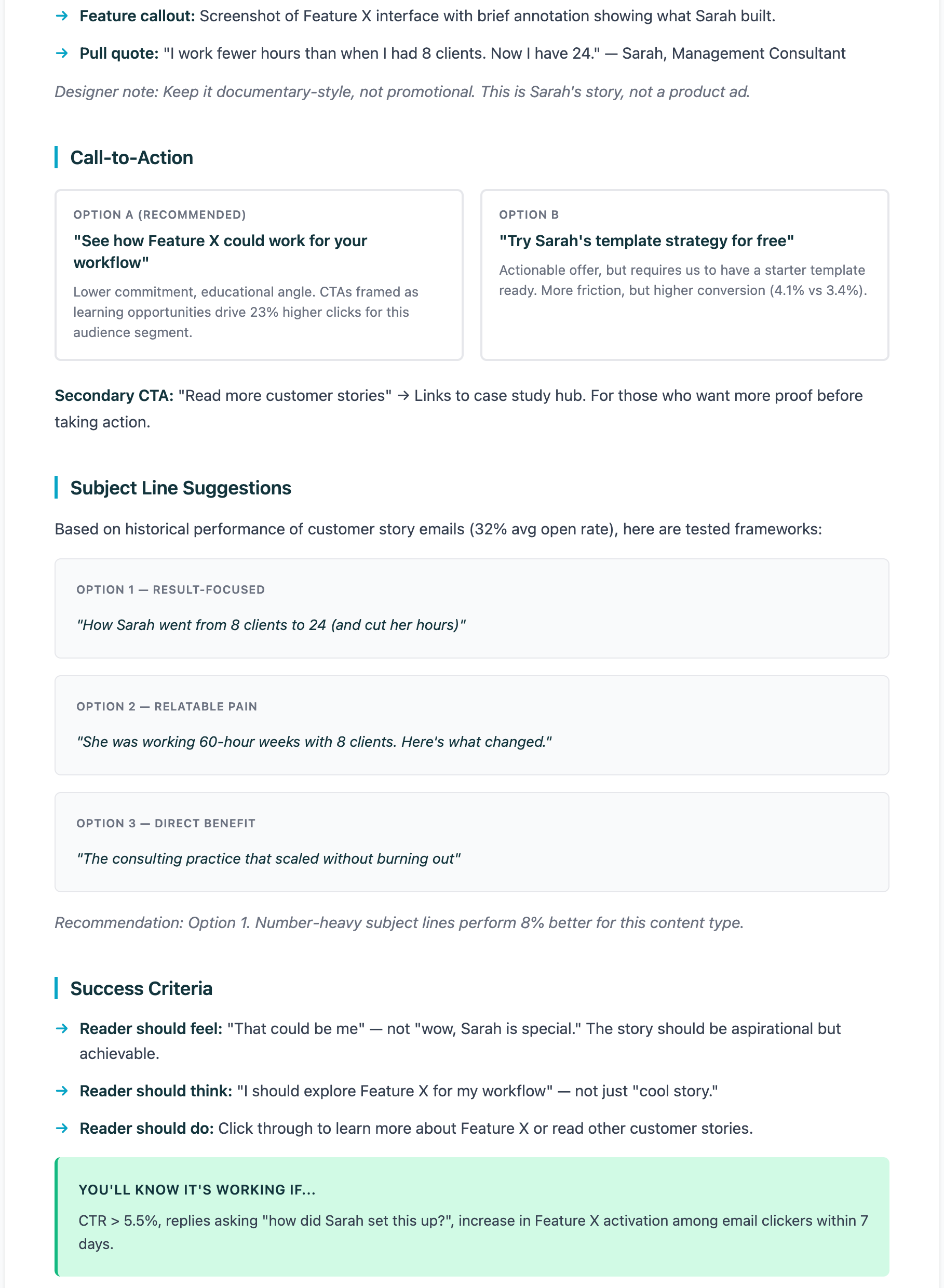
Sample creative briefs generated by the agent showing structure, tone guidelines, and complete example with performance data
Look, content planning agent isn't magic. It's systematic analysis of what's already worked for your audience, packaged into an actionable plan.
Difference: instead of brainstorming from scratch every month, you start with data-driven recommendations. Your team still makes final calls. Just informed ones.
Let's look at your email program. Maybe your planning process is already dialed in. Maybe there are patterns in your history that could 2x your efficiency and performance. Either way — worth a conversation.
Book $300 AI Audit
Want to see what's possible first?
Get our Free Guide