
-
Consulting ▼
Consulting Services
-
Solutions ▼
Marketing AI
Support AI
Analytics AI
- Technology
- About
Handles email, chat, and phone support tickets with 90% accuracy. One person can process 4,000 tickets per month instead of 400. Your team becomes operators, not processors.
Book AI AuditPretty much every company has a support team. And pretty much everywhere, it's the same bottleneck.
Tickets come in through email, chat, phone recordings. Support agents read them, figure out what the customer needs, check order history, look up the answer in docs, write a response.
Good agent handles maybe 15-20 tickets per day. That's 400 tickets per month if they're efficient.
Company grows. Ticket volume doubles. You hire more agents. Train them for weeks. Quality varies — new agents make mistakes, experienced agents burn out from repetitive questions.
And here's the thing: 70-80% of tickets are variations of the same 20 questions. "Where's my order?" "How do I return this?" "Can I change my address?" Over and over.
Result:
You're paying people to do repetitive work that could be systematized. Response times suffer when volume spikes. Quality is inconsistent. Scaling support means constantly hiring and training.
Your best agents spend most of their time on routine stuff instead of complex problems that actually need human judgment.
Here's the thing — this isn't a chatbot. It's a full support agent that handles tickets end-to-end.
Agent processes tickets from all your channels:
Doesn't matter how customers contact you. Agent handles it.
We start by analyzing your entire ticket history. Every ticket from the last 6-12 months.
System categorizes them into types:
Usually ends up being 15-25 distinct categories that cover 90% of all tickets.
For each category, we write specific instructions for how the agent should respond:
"For order status inquiries:
1. Pull tracking number from database
2. Check current status
3. Respond with: [template] + personalized details
4. If problem detected (delayed, lost), escalate to human"
Not generic responses. Specific workflows for each situation.
Agent has access to your product knowledge through RAG system:
So when customer asks "How do I clean this?" agent pulls the actual answer from your docs, not making stuff up.
This is where it gets powerful. Agent connects to your systems:
So responses are personalized with actual customer info, not generic: "Your order #12345 shipped yesterday via UPS, tracking: [number]."
We configure how the agent communicates:
Responses sound like your team wrote them, not a robot.
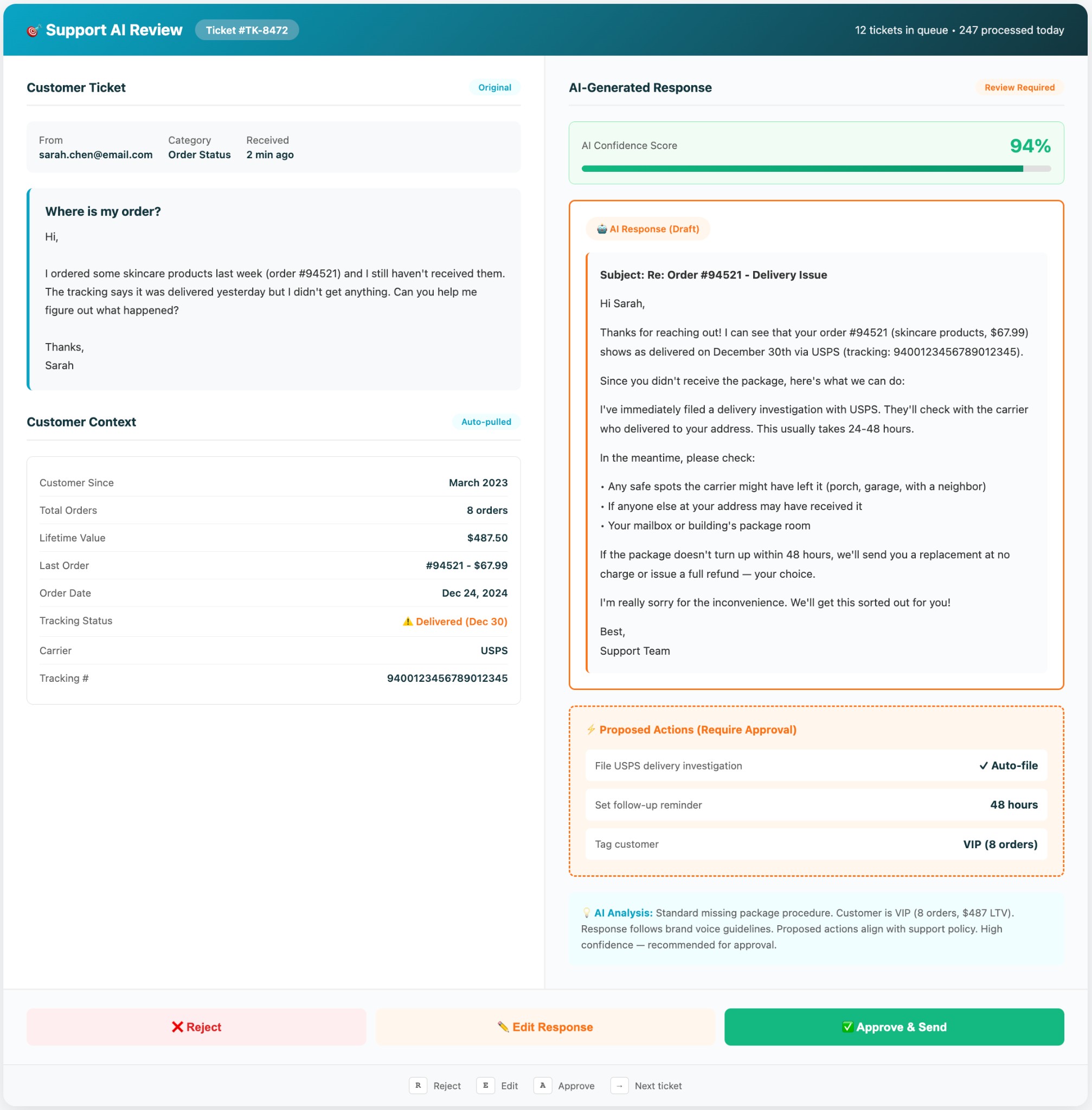
Agent generates response. Human support operator reviews it:
First few weeks, human reviews everything. As system accuracy improves, they only review edge cases.
We can configure agent to actually take actions, not just respond:
But always with human approval. Agent proposes action, human clicks approve.
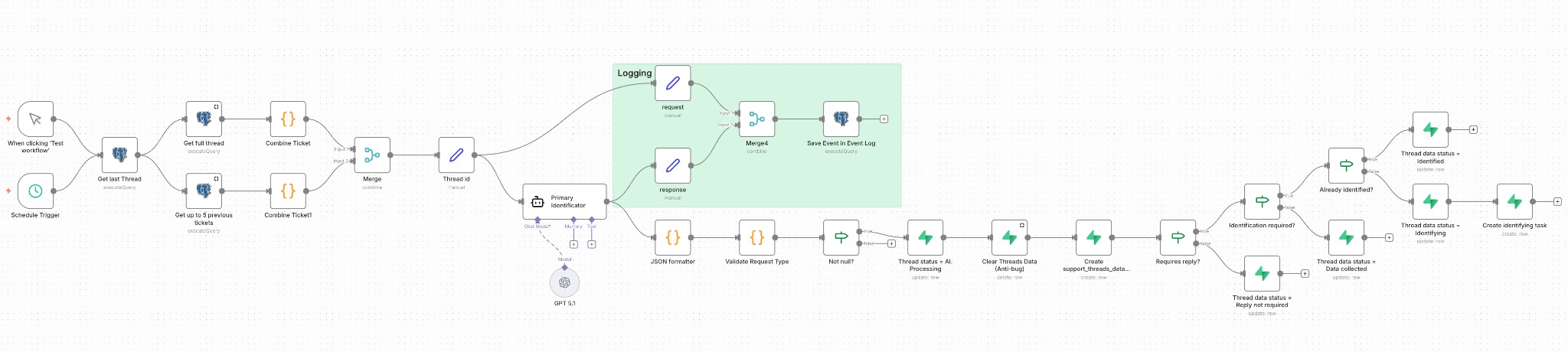
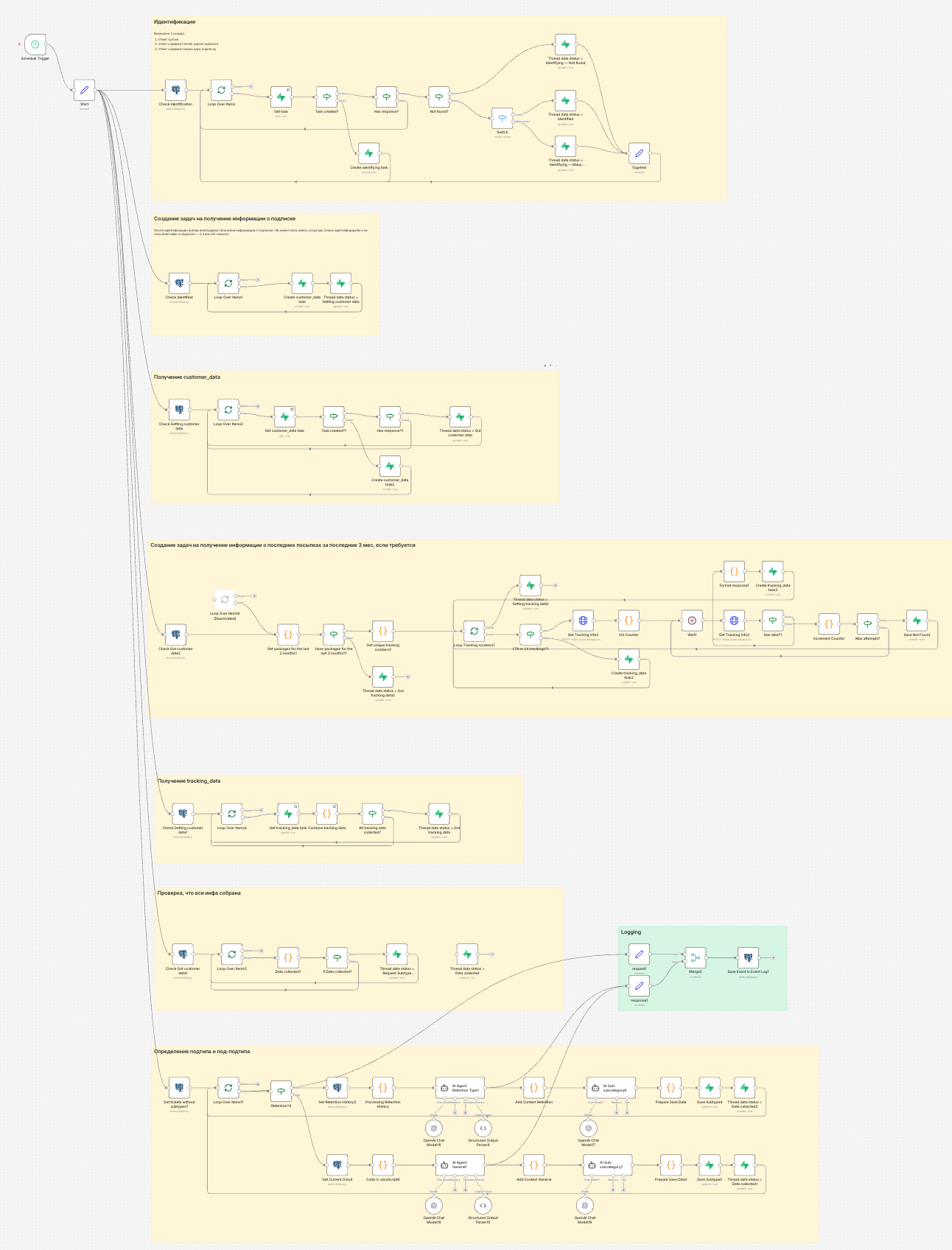
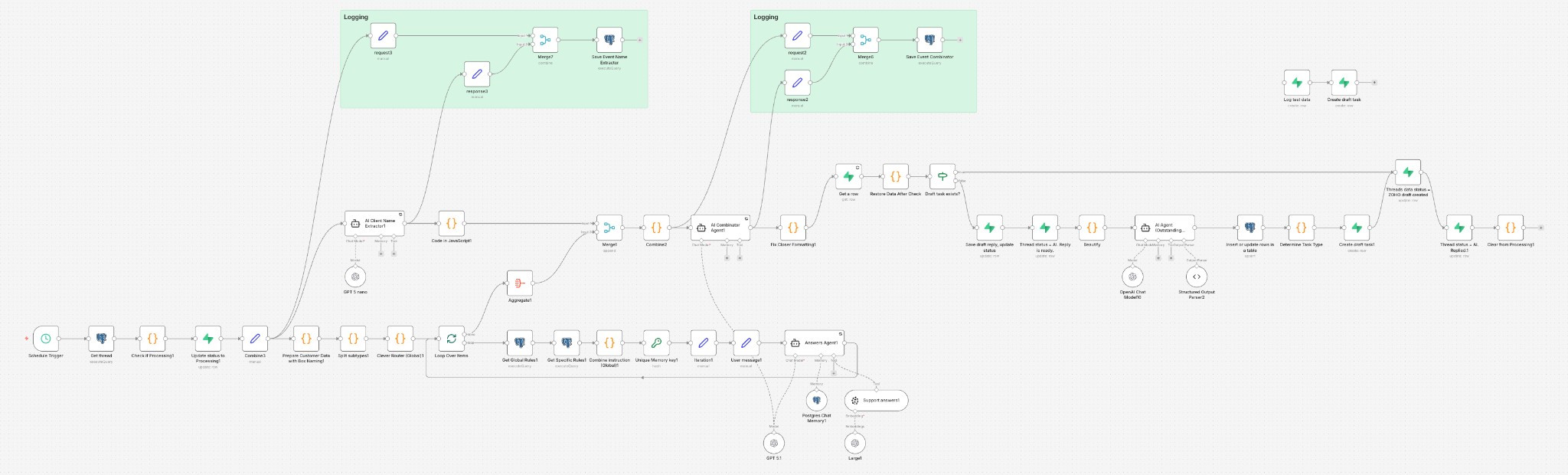
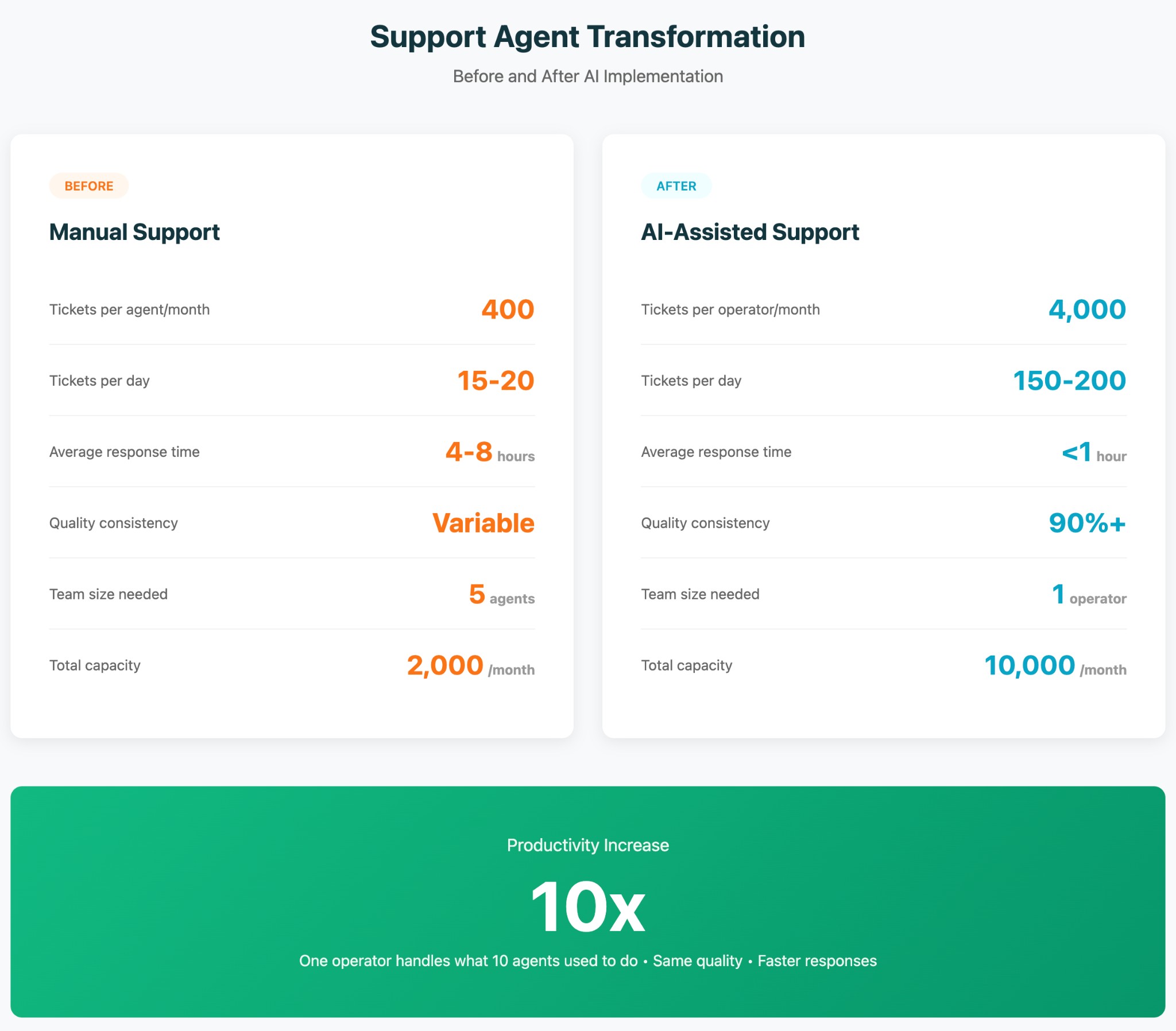
Support agent handles 15-20 tickets per day (400/month). Quality varies by agent experience. Response time: 4-8 hours. Scaling means hiring more people.
One operator handles what five used to do
If you have 5 support agents handling 2,000 tickets/month (400 each), you now need 1 agent to handle the same volume with AI assistance.
But here's what we recommend: Don't fire the other 4.
Keep them. Now you have 5x capacity. You can:
This is your buffer. Your capacity to scale.
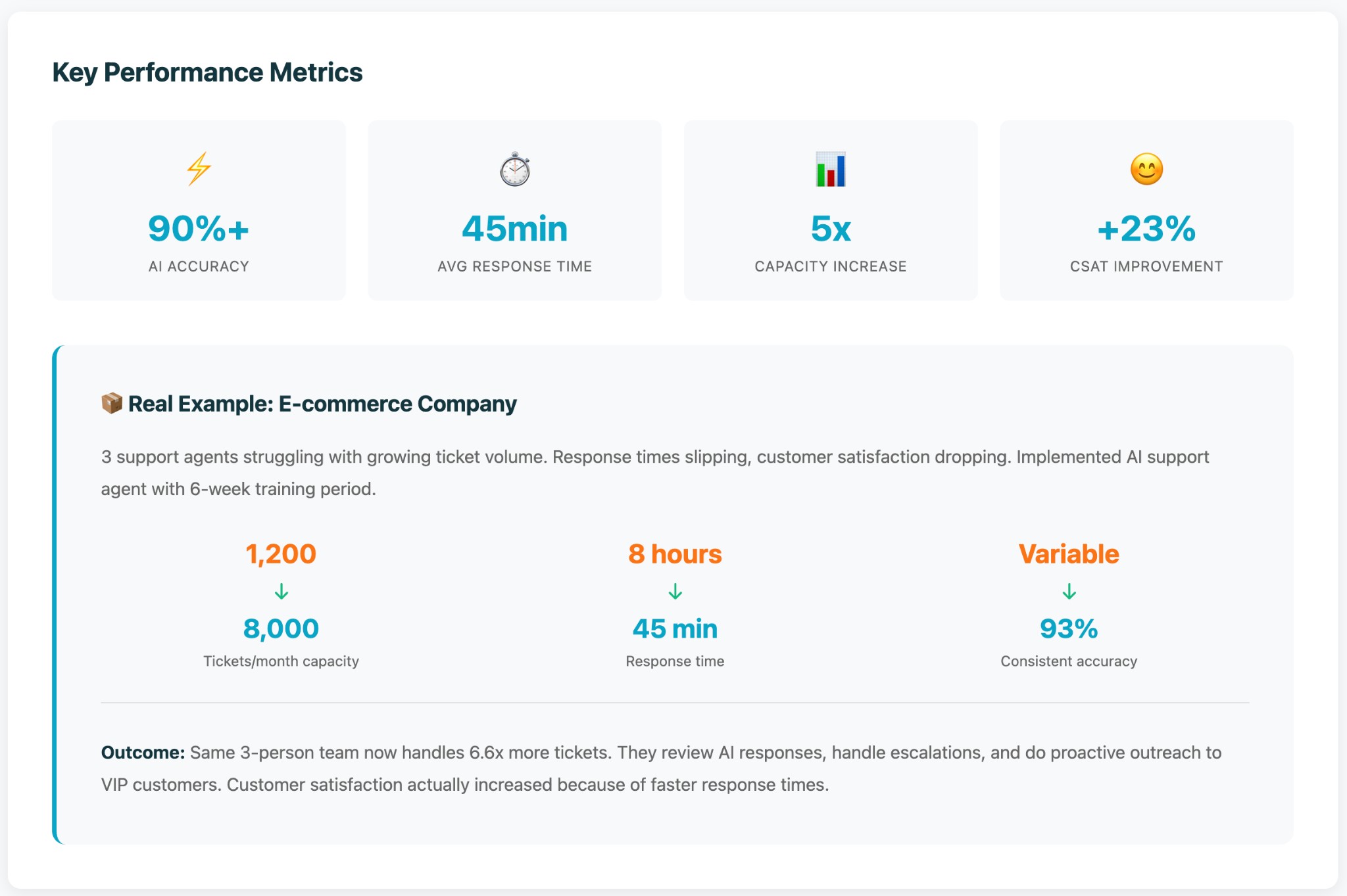
Let's say you're an e-commerce company with 3 support agents handling 1,200 tickets/month. Response times slipping, customers complaining.
With AI support agent: First month you'd see 85% accuracy. Second month: 90%. By month three: 93%.
Those same 3 people could handle 8,000 tickets/month comfortably. They'd review AI responses, handle escalations, do outreach to VIP customers.
Customer satisfaction would likely improve because response times would drop from 8 hours to 45 minutes.
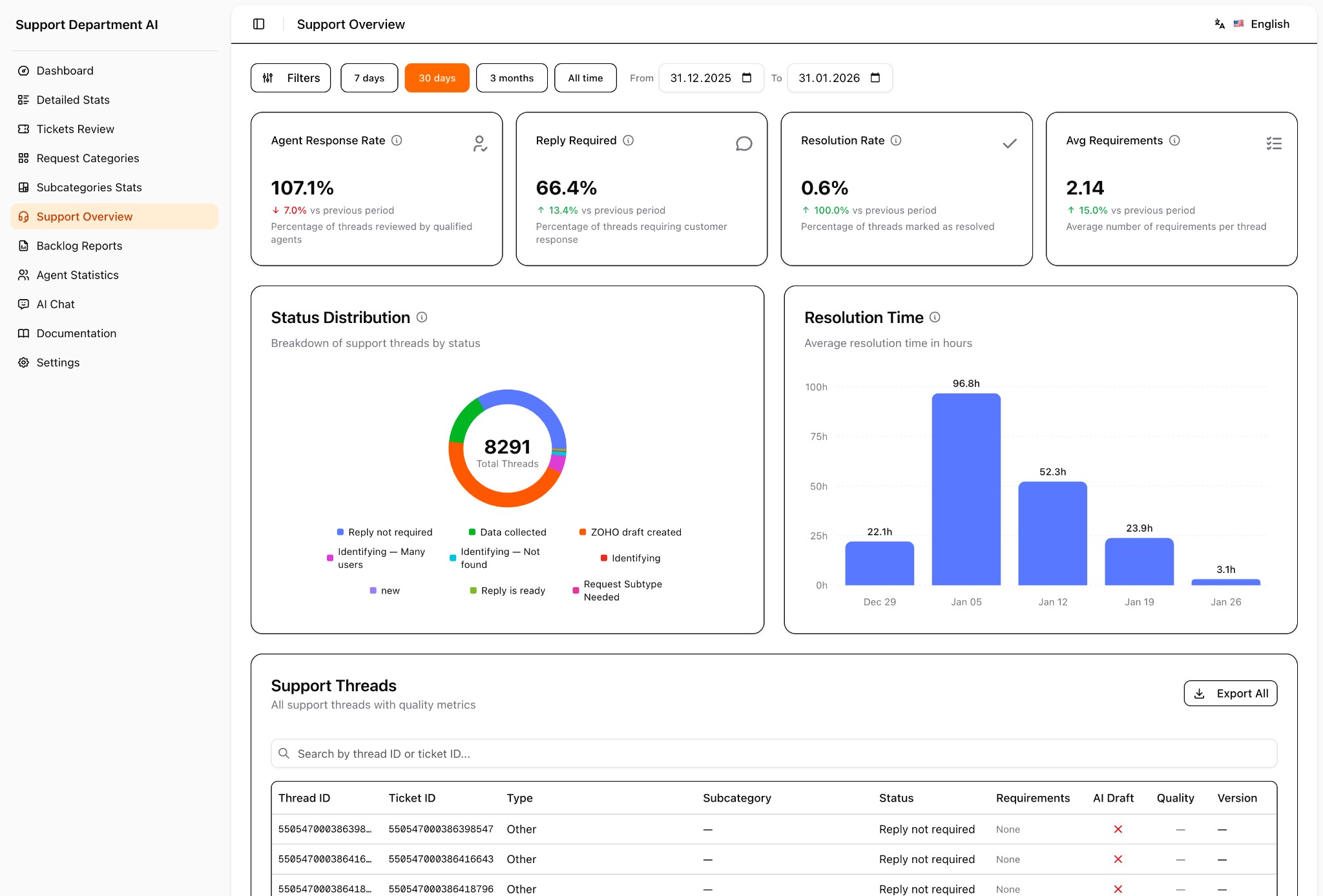
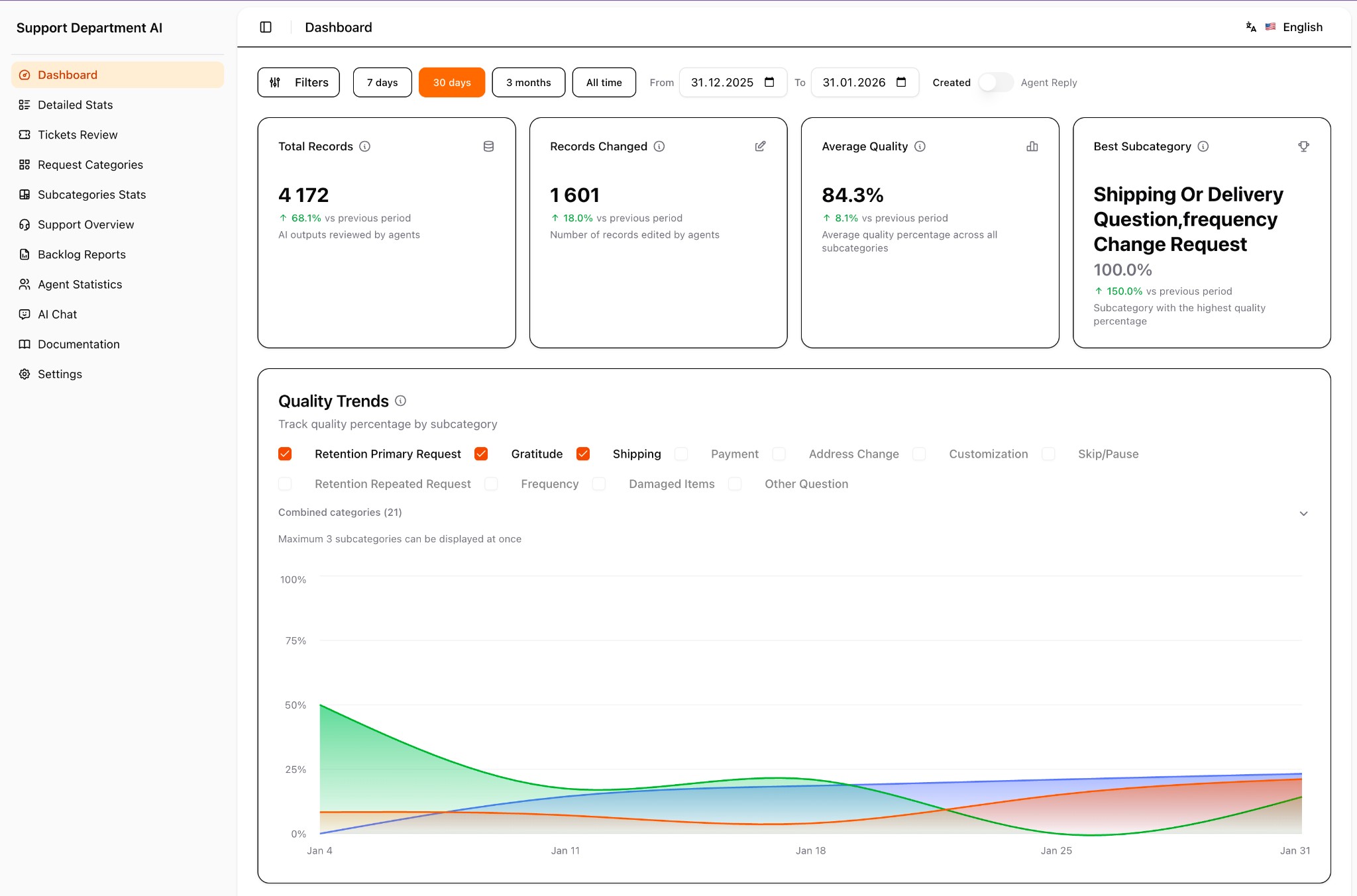
For the agent to work, we need:
We start in test mode — human reviews everything. As accuracy improves, we dial down review requirements for common ticket types.
As long as you have support ticket history and system access — we can build this.
Look, support agent isn't magic. It's not replacing your team with robots.
It's making your team 10x more productive. They become operators and escalation handlers instead of processing the same 20 questions all day.
Difference: one person handles what five used to do. Same quality. Faster responses. Your team focuses on problems that actually need humans.
Let's look at your support operation. Maybe you're already scaled efficiently. Maybe you're drowning in tickets and this could save your team from burnout. Either way — worth a conversation.
Book $300 AI Audit
Want to see what's possible first?
Get our Free Guide